Guides
Guides: all about balloon decoration, materials and regulation
Each article takes about 3 minutes to read and gives you 3 points to remember.

Why balloons work
Balloons work as decoration because we link them with celebration from an early age. Anyone who sees balloons expects there is something to celebrate or to get. That curiosity draws people inside. But the effect only lasts as long as the balloons look festive. A limp or burst balloon tells the opposite story: the party is over.
- Balloons mean a party: we learn that as children.
- A party makes people curious, also at the shop door.
- It only works as long as it looks festive.

Balloons in heat and cold
Heat makes a balloon expand, cold makes it shrink. What does that mean for latex, foil and PVC?
Read the article
Balloon decoration without helium
Helium is finite, and its supply depends on a few countries. Balloon decoration works without it too.
Read the article
Why green is not always green
Many balloons are called biodegradable, but stay in nature for months to years.
Read the article
Latex, foil, hard plastic or PVC?
Every material has its strengths. The choice depends on how often, where and how long you decorate.
Read the article
Reusable and still hygienic
Yes, with a simple routine. How to clean the balls, and where hygiene matters most.
Read the article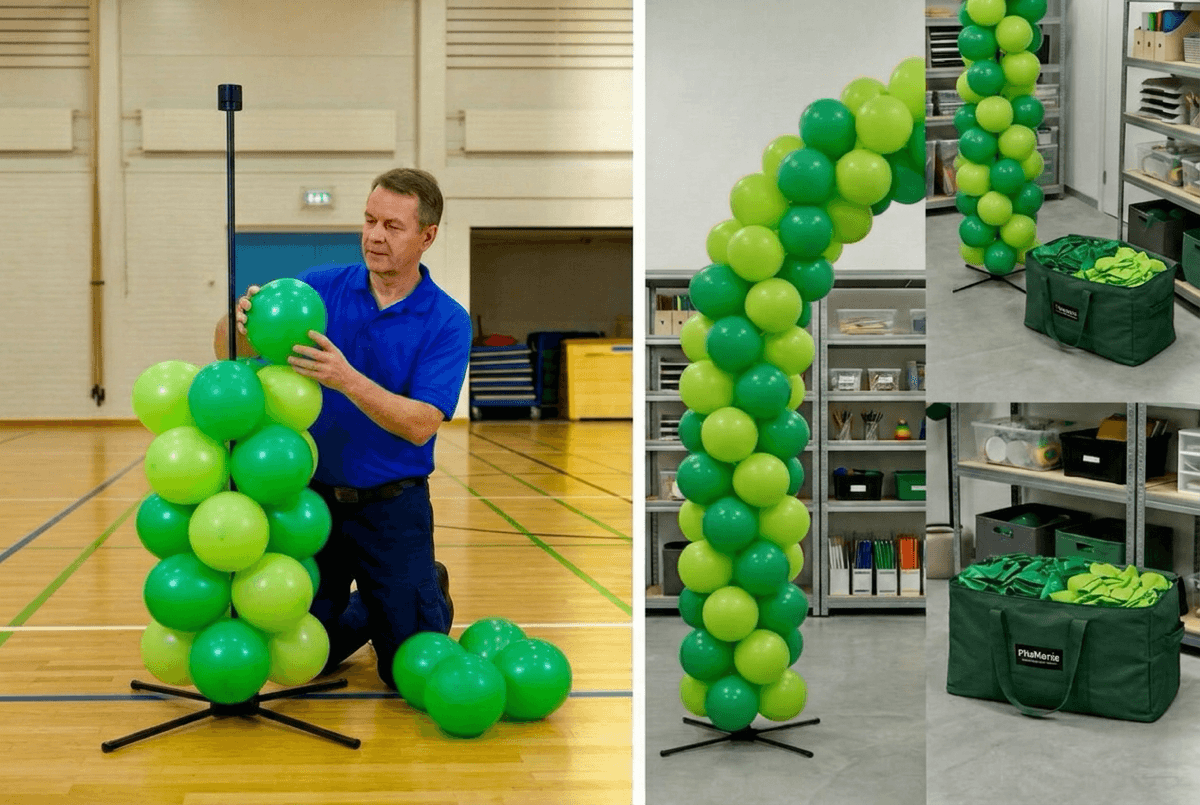
What does balloon decoration really cost?
The price per event says little. Here is how to work out what balloon decoration costs you per year.
Read the article
What is actually in a balloon?
Most traditional balloons are made of natural rubber (latex), and strict European requirements apply to them.
Read the article


Would you rather see how it works right away?
View the balloon column, or get in touch about your venue.